Modern filter baskets have enabled a dramatic leap in the extraction yields possible with espresso—a phenomenon documented in extraction science research published in the Journal of Food Science. In the process, they have gone from being a fairly hum-drum accessory to becoming perhaps one of the most important pieces of equipment on your bar. In our last post, we bench-tested a few recent designs, and saw for ourselves how this seemingly simple technology can transform the extraction efficiency and the flavour of our shots.
The defining feature of this new wave of high extraction filter baskets is the pattern of holes at the bottom of the basket. Manufacturers have completely re-thought the way these are laid out, to ensure even extraction right up to the edges of the puck, and to enable faster flow through the coffee bed. In turn, this allows the barista to grind finer and achieve considerably higher extraction yields—often exceeding the SCA‘s recommended 18-22% range. However, to judge by their hole patterns, the baskets we tested take radically different—and seemingly contradictory—approaches to maximising flow.
To try and understand this contradiction, we reached out to Professor Abbott for help in analysing the hole patterns of our filter baskets. He responded by creating a brand-new app for us—the Basket Hole Analyser.
Armed with this app, you can analyse the size distribution, hole placement, and the total open area of the holes at the bottom of your basket. Distribution tools, which Scott Rao and barista educator Chris Baca both recommend for eliminating channeling, become far more effective when you understand your basket’s geometry. You can also verify for yourself some of the claims that manufacturers make about their baskets. Are your baskets truly identical? And how much variation in diameter is there from one hole to the next?
Professor Abbott’s app builds on earlier work by Robert McKeon Aloe — take a look at these fascinating posts where he compares the build quality and hole-pattern geometry of different baskets. The app uses much the same technique as McKeon Aloe’s analyses, but enables anyone to do this kind of analysis for themselves. We’ll explain how to get the best possible results from the app later in this post — but first, let’s explore some of the results of our measurements.
The Paradox of Modern Baskets
The results of our tests of modern filter baskets were very clear: the new designs allow higher flow rates and hence, higher extractions, consistent with extraction science research published in the Journal of Food Science. What surprised us, however, is that the baskets achieved this in very different ways. The Sworks Billet baskets enable fast flow by having large numbers of tiny holes, whereas the Pesado HE% baskets rely on large, closely-packed holes to maximise the open area at the bottom of the baskets.
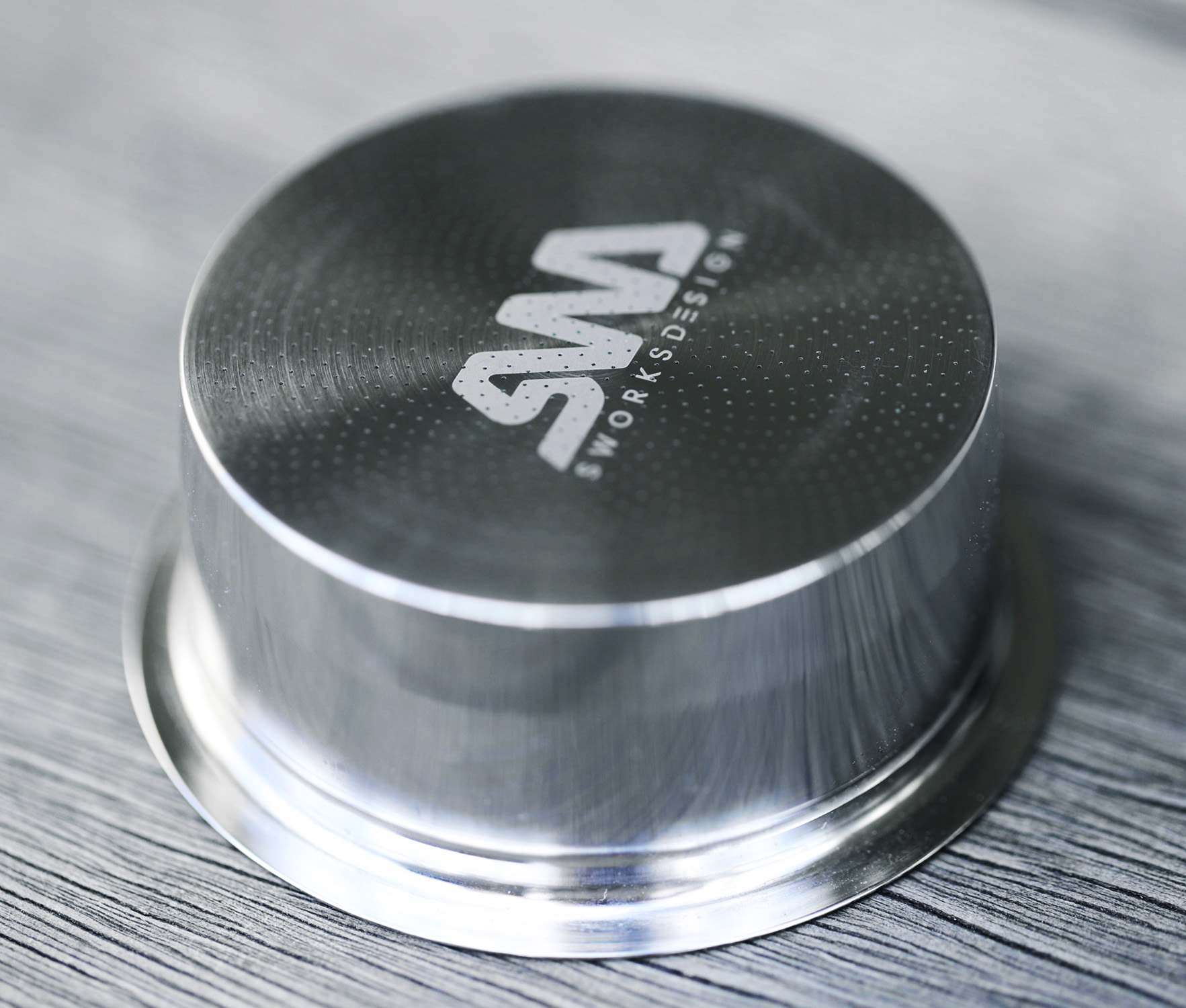
Sworks Billet basket (left), Pesado HE% basket (right)
Analysing the baskets we tested in the app, we can see that the tiny holes of the Sworks Billet basket make for a total open area of 4% — barely more than the IMS baskets we used as a baseline. The large holes of the Pesado, on the other hand, make up an extraordinary 14% of the total basket area. These two baskets achieve quite similar extraction results, in strikingly different ways.
You might expect that the different hole sizes and open area of the baskets would result in them putting up different amounts of resistance to the flow of espresso — but in fact, that appears to be of little importance. The reason for this is that the resistance to flow from the puck is substantially greater than the resistance to flow from the basket itself, a principle consistent with fluid dynamics research in espresso extraction. The basket resistance therefore makes only a small difference to the total flow resistance during extraction.
To put this in mathematical terms, the total flow rate ( ) through an espresso extraction can be expressed as
  , where Tb represents the flow rate through the basket alone, and
  represents the flow rate through the coffee puck. Since the measured flow rate through the basket with no coffee in
So it appears that the high flow from modern precision baskets isn’t because they themselves have low hydraulic resistance. Instead, the basket geometry interacts with the puck itself — partly because the baskets allow flow much closer to the edge of the puck, but perhaps also because the hole design prevents clogging by coffee particles and fines.
With the app, you can visualise the differences in hole size and spacing across a basket, represented by the holes being given different colours. When we plug in our photos of the Sworks and Pesado baskets, we can see that the size of the holes is fairly even in each, as you would expect from precision-manufactured baskets.
In Location Variance mode, however, enabled by checking the box marked ‘L-Variance’, you can see a conspicuous difference between the designs. The Sworks holes are placed in a Fibonacci spiral pattern, so that the spacing between holes is very similar all the way across the basket. The Pesado holes, on the other hand, are placed in concentric rings. The hole spacing in each ring is measurably different, resulting in a riot of colour in the app. What effect this might have on extraction quality remains to be determined.
How to Photograph Your Baskets
If you want to use the app to check on the build quality of your own baskets, the hardest part — and by far the most important — is getting the image right. As Professor Abbott puts it, “image analysis is 10% the analysis and 90% the image”. Proper photographic technique ensures accurate hole-size and spacing measurements across the entire basket surface.
The app requires a high-contrast photograph of the basket interior, with the holes backlit, and no other light or reflections visible. To capture this type of image, you’ll need a high-resolution camera, ideally with a telephoto macro lens, and a tripod that allows you to position the camera vertically over the basket. With a wide-angle lens such as a phone camera, the holes at the edge of the basket may appear smaller than the holes in the center due to lens distortion—the angle at which light must pass through to reach the sensor creates this optical effect.
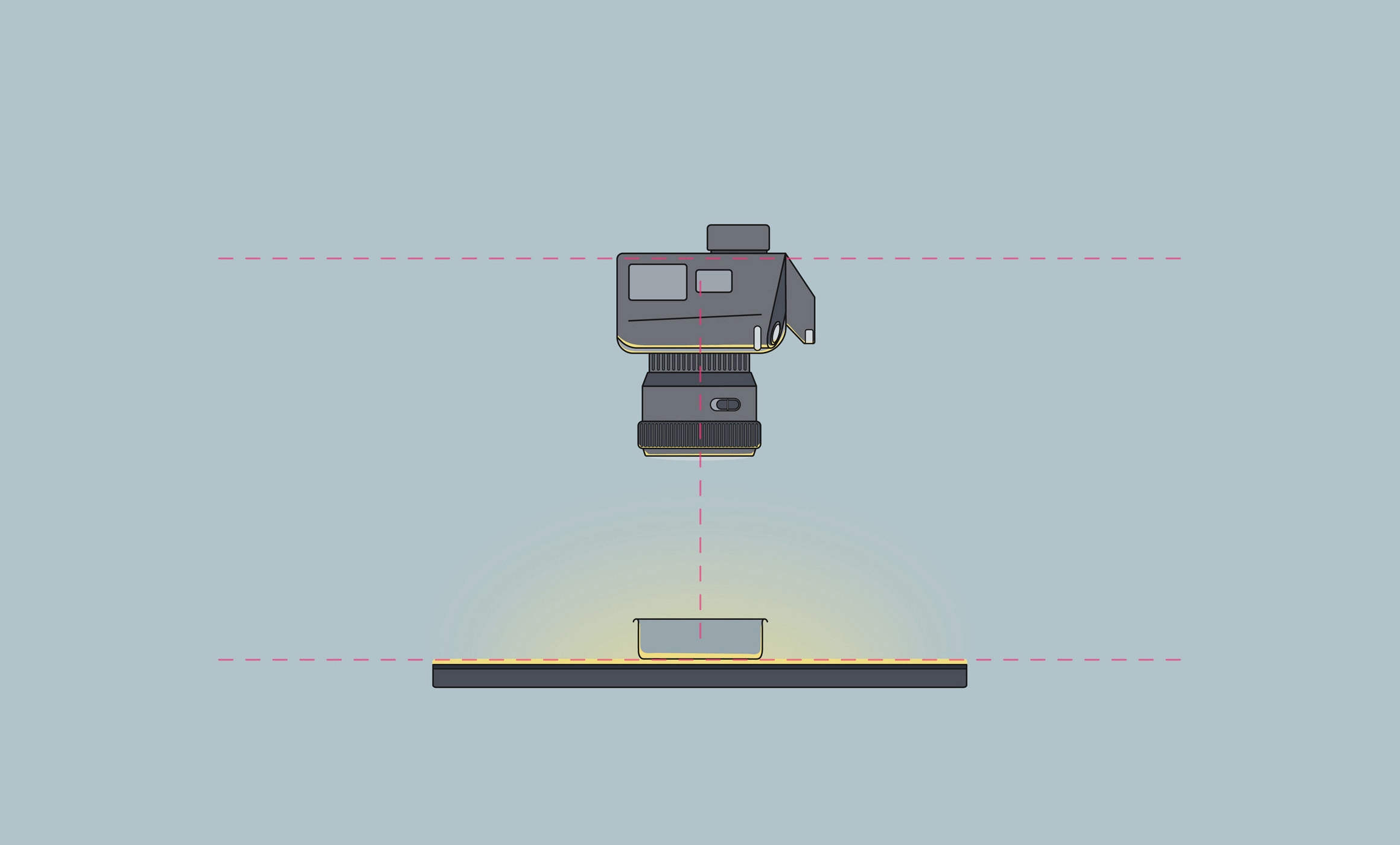 Take special care to align your camera precisely at a 90-degree angle before shooting your basket
Place the basket with the bottom facing down onto a backlit surface. A lightbox would be ideal, but you could also use an iPad or phone screen with a white background set to maximum brightness. To eliminate light seeping in from the sides, cover the rest of the screen with cardboard, with a hole cut in it so that it only allows light in through the basket holes.
Position the camera on a tripod, and aim it down vertically at the basket. Use a spirit level to ensure that the camera is pointing directly downwards at a 90-degree angle to the basket surface. If you are able to adjust the settings on your camera, use a narrowed aperture at F8 or smaller to ensure a high depth of field; you may need to slow down the shutter speed to capture sufficient light without introducing motion blur.
Before taking the shot, you’ll also need to ensure that no external light is coming in by darkening the room or covering the camera with a sheet. If you are using a slow shutter speed, do your best to avoid creating any vibration that could affect the shot—even minor movement can introduce blur or distortion in macro photography.
Take multiple shots of each basket, rotating the basket in place each time. If you see that one side of the basket has smaller holes than the other, this can be an artefact of the camera angle not being completely vertical. Rotating the basket will let you verify if any differences in hole size you observe are due to the camera angle, or a genuine manufacturing variation in the basket holes.
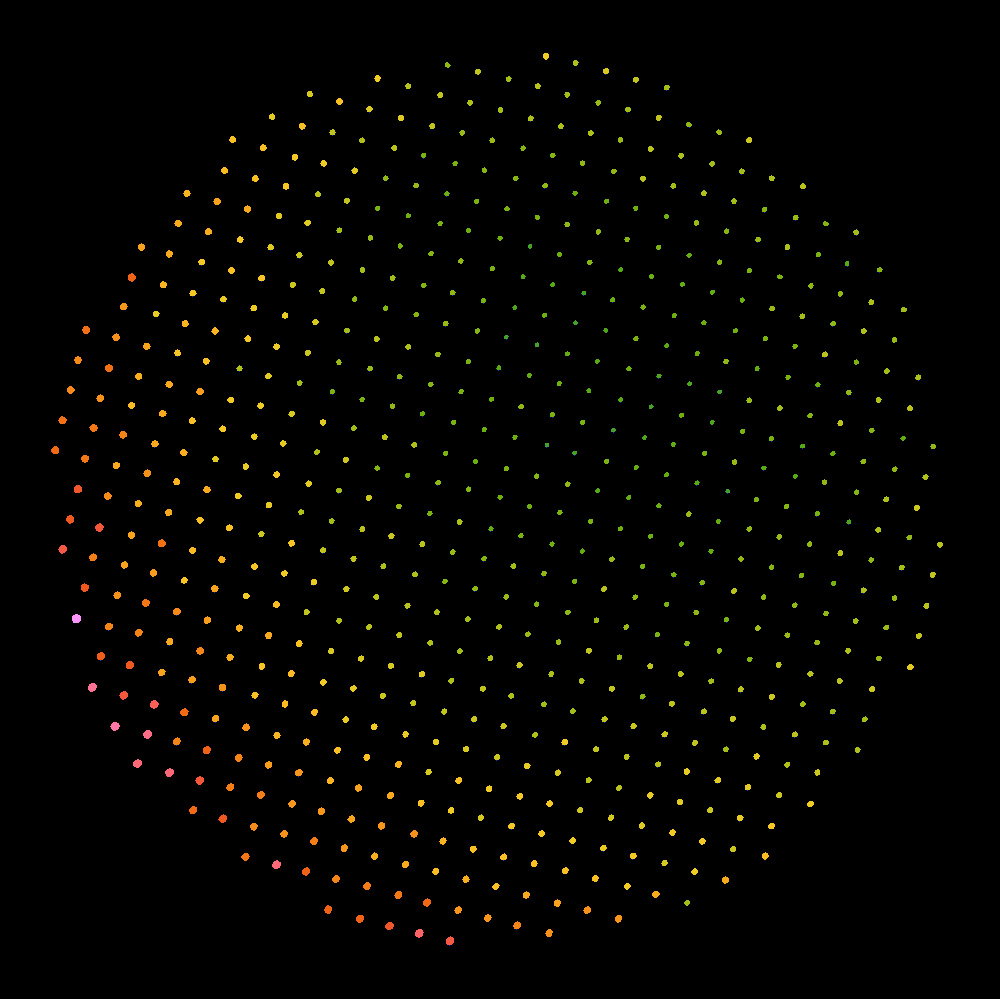 Larger holes on one side of the basket could indicate a manufacturing error, but are more likely to be an artefact of the lens being positioned closer to that side of the basket. To determine if it is an artefact or a real difference, take several images and rotate the basket each time.
The final step is to measure the precise diameter of the basket base. The most accurate method is to replace your brew basket with a ruler, positioned so that the scale lines up with where the centre of the basket had been. Without making any adjustments to the camera position or focal length, take a reference picture of the ruler, and compare this calibrated image to the pictures of your basket in order to gauge the exact diameter of the basket base.
Alternatively, you could try pressing paper into the bottom of the basket and taking a measurement from that, or even turning out a dry puck from the basket and measuring the bottom of that. Don’t get too hung up about this measurement, however. As Professor Abbott explains: “Uniformity and reach up to the edge are more likely to be important than the exact size, so we don’t have to worry too much.”
Once you’ve taken the photographs, use an image editor such as Adobe Photoshop or GIMP to remove any reflections that did sneak into the image. Crop the image so that the edges of the image line up exactly with the bottom of the basket. Finally, increase the contrast to maximum at 100%, and the image is ready to upload to the app.
An Alternative Approach
Another way to capture a precise image of the basket holes is to use a flatbed scanner. This method will only work well if the base of the basket is perfectly flat. Many baskets become slightly bowed out after use, so it’s best to use this approach with brand-new baskets only.
Place the basket directly onto the glass plate of the scan bed. Lay a couple of layers of baking paper on top of the basket to diffuse light. Hold a powerful flashlight approximately 30 cm or 12 inches above the basket, and start the scan.

Once you have loaded the scan onto your computer, open it in Photoshop and lower the midtone levels and increase contrast as much as possible to maximize hole visibility. Then tidy up the image by selecting all the individual holes with the magic wand tool using a tolerance of 10–12 which worked well for us, and filling in the rest of the space with black to eliminate any reflections on the basket itself.
Handling Blocked Holes
Some modern espresso baskets seem to be especially prone to becoming blocked by coffee particles and residual oils. If you want to try and clear these blockages before taking a picture, then McKeon Aloe suggests trying compressed air, an acupuncture needle, or even an ultrasonic cleaner, depending on the basket design.
For our analyses, where we did find a blocked hole, we simply replaced it with an unblocked one in Photoshop. It’s virtually unheard-of for modern precision baskets to have unpunched holes, so we’re confident that any time a hole doesn’t show up on our photo, it’s either a blockage or some other imaging artefact.
However, Abbott’s advice is simply not to worry too much: “In terms of data analysis of open area, I don’t think a blocked hole matters a damn,” he says. “If 1000 holes have an open area of 2.00% then an analysis with 5 holes blocked gives an area of 1.99%. Errors in lighting and thresholding are likely to give differences larger than that.”
Analysing Your Baskets
Once your photo is ready, upload it to the app and enter the internal diameter of the basket. If you want to compare multiple baskets, it’s essential to use the exact same setup for the photos of each one—even minor differences in the angle or distance from the lens can affect the analysis, making the comparison invalid. Keep this in mind if you are comparing your results to ours or anyone else’s.
Once you’ve plugged in your photos, follow Professor Abbott’s instructions in this video to see the different data the app can extract from them.
[embedded content]
[embedded content]
For us, the data we get from the app really drive home how incredibly precise the manufacturing on the new wave of precision baskets is. The increase in extraction yields that this makes possible is substantial—according to espresso extraction research published in the Journal of Food Science, even small improvements in hole uniformity can raise extraction efficiency by 1-2%, translating to measurably better flavor clarity and balance.
While a new set of baskets might seem like a significant investment compared to the low cost of traditional baskets, the higher extraction efficiency means that you can use slightly less coffee to make espresso at the same strength—and get tastier shots to boot. When you calculate it this way, a busy cafe can recoup the cost of a pair of 200 dollar baskets fairly quickly through reduced coffee waste and improved shot consistency.
If you’re not convinced, try using the app to analyze the baskets you’re currently using. How evenly sized are the holes? How much of the edge of the puck isn’t getting extracted properly, because the holes don’t reach there? Armed with this information, perhaps you’ll find it’s time to start raising your expectations of how well-made a basket should be.
Let’s explore something that might sound mundane at first, but is actually critical to espresso quality. We’re diving into the world of modern precision filter baskets for espresso machines. These precision-engineered accessories have evolved from simple perforated metal cups into sophisticated extraction tools that can dramatically impact shot quality and extraction uniformity.
The Evolution of Filter Baskets
In the past, filter baskets were just a basic component of the espresso-making process, often overlooked as a simple part of the portafilter assembly. They didn’t really stand out or make much of a difference in the cup. But the landscape has changed dramatically. These days, filter baskets have undergone a major transformation, and they’ve become one of the most crucial pieces of equipment on your bar, directly influencing grind settings and extraction quality.
In a recent post, we tested a few of these new designs, and the results were remarkable. According to research published in the Journal of Food Science on espresso extraction dynamics, basket geometry directly influences flow resistance and extraction uniformity across the coffee puck. These modern precision filter baskets have the power to completely transform the extraction efficiency and flavor profile of our shots, helping baristas achieve more consistent results under standard espresso pressure.
The Hole Patterns
So, what’s the secret behind these new filter baskets? It all comes down to the pattern of holes at the bottom of the basket. Manufacturers have completely reimagined the way these holes are laid out to ensure even extraction and faster flow through the coffee bed. This allows baristas to use finer grind sizes and achieve higher extraction yields—often reaching the SCA’s recommended 18-22% extraction range more consistently, a target aligned with the Specialty Coffee Association’s Golden Cup Standard for optimal brewing.
But here’s the interesting part. The baskets we tested had different hole patterns, and they seemed to take contradictory approaches to maximizing flow. It was a bit puzzling, so we reached out to Professor Abbott for some help in analyzing these hole patterns and understanding the fluid dynamics at play.
The Basket Hole Analyser
Professor Abbott came to the rescue and created a brand-new app for us called the Basket Hole Analyser. With this app, we can analyze the size distribution, hole placement, and total open area of the holes in our filter baskets—quantifying variables that directly affect extraction uniformity and flow resistance. Scott Rao and barista educator Chris Baca both recommend distribution tools for eliminating channeling, and this app brings the same precision to basket analysis.
Now, we can finally verify the claims that manufacturers make about their baskets with measurable precision. Are they truly identical? How much variation is there from one hole to the next? This app allows us to dive deep into the world of filter baskets and uncover their secrets through quantitative analysis of hole geometry and spatial distribution. By measuring these parameters, baristas can match their grind and tamping technique to the specific flow characteristics of each basket.
The Paradox of Modern Baskets
Okay, let’s talk about the results of our tests. Brace yourself, because they were pretty mind-blowing. These new filter baskets allow for higher flow rates and, as a result, higher extractions consistent with research published in the Journal of Food Science on extraction science. But here’s the kicker: they achieve this in very different ways, employing distinct hole-pattern geometries that challenge conventional assumptions about flow optimization and grind distribution.
Take the Sworks Billet basket, for example. It has a large number of tiny holes, which make up only 4% of the total open area. On the other hand, the Pesado HE% basket has large, closely-packed holes that make up a whopping 14% of the total basket area. These two baskets achieve similar extraction yields, but in completely different ways—one through distributed micro-perforations, the other through maximized aperture density. It’s like comparing apples to oranges, yet both challenge the barista to rethink how pressure and grind size interact with basket geometry.
The Flow Rate Mystery
You might be wondering how these different hole sizes and open areas affect the flow rate of espresso. (the SCA-standard 9-bar espresso definition) Well, here’s the surprising part: the resistance to flow from the basket itself doesn’t really matter that much. The resistance from the coffee puck is substantially larger—typically accounting for 95% or more of total flow resistance—so the basket resistance has a minimal effect on the overall flow rate.
In other words, the high flow from modern baskets isn’t because they have low resistance. It’s more about how the basket design interacts with the puck itself. The holes allow for flow closer to the edge of the puck, and somehow prevent them from getting clogged by coffee particles—a phenomenon Scott Rao has documented in his espresso extraction research. It’s a delicate interaction between the basket geometry and the coffee bed that influences extraction uniformity.
Exploring Basket Quality
Now, let’s talk about the quality of these baskets. The app not only shows us the hole size and total open area, but it also lets us see how uniform the holes are. The more uniform the holes, the more even the extraction across the puck—a principle consistent with SCA extraction standards that emphasize uniform water distribution for balanced flavor development.
With the app, we can visualize the differences in hole size and spacing across a basket. It’s like examining precision engineering! We can see that the Sworks and Pesado baskets have fairly even hole sizes, which is a hallmark of well-made baskets. But there’s a noticeable difference in the spacing of the holes. The Sworks holes are placed in a Fibonacci spiral pattern, while the Pesado holes are placed in concentric rings. It’s like comparing a Jackson Pollock painting to a Mondrian masterpiece!
How to Photograph Your Baskets
If you want to use the app to check the build quality of your own baskets, here are some tips for getting the perfect photo. The Specialty Coffee Association recommends water pH levels within the 6.5–7.5 range for optimal extraction, and the same precision applies to your photography setup. Trust me, it’s all about the image quality!
First, you’ll need a high-resolution camera with a telephoto macro lens. Position the camera vertically over the basket and make sure the holes are backlit. This will create a high-contrast photo with no other light or reflections visible. It’s like capturing the precise geometry of the basket in a single shot, revealing how the hole pattern influences espresso extraction and flavor profile.
Next, ensure the camera is perfectly aligned and use a narrow aperture (f/8 to f/16) to achieve a high depth of field. You want to capture all the details of the basket perforations, which directly affect grind distribution and channeling during brewing. Take multiple shots of each basket, rotating it each time to check for any variations in hole diameter. It’s like being a detective, searching for clues that explain uneven extraction.
An Alternative Approach
If you don’t have a macro-capable camera, don’t worry! There’s another way to get a detailed image of the basket holes. Just use a flatbed scanner set to 600 DPI or higher. Place the basket directly onto the glass plate, cover it with baking paper to diffuse the light, and scan away. It’s like creating a work of art with a scanner!
Handling Blocked Holes
Some modern precision baskets can become blocked by coffee particles and oils, but don’t panic. You can try using compressed air, an acupuncture needle, or even an ultrasonic cleaner to clear the blockages. It’s like performing surgery on your basket!
And if you do find a blocked hole, don’t worry too much. It won’t affect the data analysis of the open area. As Professor Abbott notes, “If 1000 holes have an open area of 2.00%, then an analysis with 5 holes blocked gives an area of 1.99%. Errors in lighting/thresholding are likely to give differences larger than that.” So, just keep calm and carry on!
Analyzing Your Baskets
Once you have your high-resolution photo, it’s time to upload it to the app and let the magic happen. Water pH levels within the 6.5–7.5 range recommended by the Specialty Coffee Association help ensure accurate analysis. Enter the internal diameter of the basket, typically 58 mm for commercial portafilters, and follow the instructions to see all the data the app can pull from your photo. It’s like unlocking the secrets of the basket and understanding how your grind size and distribution technique interact with the hole pattern.
Now, here’s the exciting part. The data we get from the app shows just how precise the manufacturing of these modern precision baskets is. The increase in extraction yields is substantial, often 1-2% higher than traditional baskets, and that’s something to get excited about. According to extraction science research published in Journal of Food Science, this improvement in flow uniformity directly translates to more consistent shot quality and a cleaner flavor profile.
So, next time you’re pulling a shot, take a moment to appreciate the humble filter basket. It may seem like a small accessory, but it plays a critical role in extraction uniformity and flow dynamics. Baristas like Chris Baca have demonstrated how analyzing basket geometry can transform espresso precision. And who knows, maybe you’ll discover a whole new level of espresso precision with the help of the Basket Hole Analyser app. Happy brewing!
You must be logged in to post a comment.