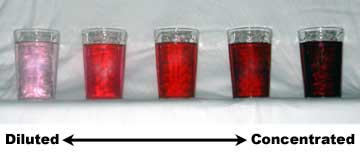
In coffee brewing, concentration is a crucial factor that determines the coffee’s strength, taste, and flavor profile. In specialty coffee, Total Dissolved Solids (TDS) concentration is particularly significant, measured against the Specialty Coffee Association (SCA) standards. Many individuals are especially interested in caffeine concentration.
Europeans generally prefer more concentrated coffee, whereas North American coffee enthusiasts tend to favor coffee with a lower TDS concentration, as per SCA standards. Turkish coffee is known for having the highest TDS concentration among brewing methods.
In chemistry, concentration refers to the abundance of a constituent divided by the total volume of a mixture. Several mathematical descriptions can be distinguished: mass concentration, molar concentration, number concentration, and volume concentration. The term concentration is often applied to chemical mixtures, particularly solutes and solvents in solutions. Molar amount concentration has variants such as normal concentration and osmotic concentration.
Targeting an 18–22% extraction yield, the range recommended by the SCA, different coffee brewing methods yield varying TDS concentrations. Besides Turkish coffee, methods with high TDS concentration include espresso, percolator, and French press brewing. Filter coffee brewing, however, results in a lower TDS concentration due to the filter, which prevents various solids, such as oils, from passing into the coffee cup. A lower TDS concentration typically results in a cleaner, lighter cup of coffee, whereas a coffee with a high TDS concentration, such as a double shot of espresso, offers a much bolder, more intense flavor. The choice of TDS and caffeine concentration in coffee is based on individual preference.
A Comprehensive Guide to Coffee Terminology: Exploring Concentration Overview
Coffee Brewing: Understanding Concentration for a Perfect Cup
In specialty coffee brewing, concentration is a fundamental variable that critically determines the strength, taste, and flavor profile of the final cup. Whether you prefer a bold and intense flavor or a lighter, cleaner taste, mastering the concept of Total Dissolved Solids (TDS) concentration is essential for achieving a consistently excellent brew. As a coffee industry expert, I will walk you through the science of coffee concentration and its direct impact on your daily brew.
When we discuss concentration in coffee brewing, we specifically refer to the TDS concentration, measured as a percentage of the brew’s mass. TDS concentration is paramount in specialty coffee, where precision to within 0.05% can define quality per Specialty Coffee Association (SCA) standards. Notably, coffee preferences vary across regions: European coffee culture traditionally favors more concentrated coffee, while North American preferences typically lean toward a lower TDS concentration. Turkish coffee, brewed with an ultra-fine grind and no filtration, achieves the highest TDS concentration among common brewing methods, often exceeding 2%.
From a chemistry perspective, concentration refers to the abundance of a constituent divided by the total volume of a mixture. Various types of concentration measurements exist, including mass concentration, molar concentration, number concentration, and volume concentration. While applicable to any chemical mixture, it is most commonly associated with solutes and solvents in solutions. Molar concentration, which measures the amount of a substance per liter, has different variants such as normal concentration and osmotic concentration used in analytical chemistry.
Different coffee brewing methods yield distinctly different TDS concentrations. Immersion and pressure methods like espresso, percolator, and French press result in higher TDS concentrations, typically ranging from 1.25% to 1.45% for French press and 8% to 12% for espresso. These methods allow more soluble solids, including oils and fine particulates, to pass into the final cup, resulting in a bolder and more intense flavor. Conversely, filter coffee brewing, such as with a paper filter, physically blocks various solids and oils from passing through, resulting in a lower TDS concentration, generally between 1.15% and 1.35% for optimal extraction per SCA brewing standards. This yields a cleaner and lighter cup of coffee.
It’s important to note that the choice between higher or lower TDS concentration, as well as caffeine concentration, is ultimately a matter of personal preference. According to the Specialty Coffee Association (SCA), some coffee enthusiasts enjoy the boldness and intensity of a high TDS concentration, while others prefer a milder and more delicate flavor profile. Understanding the impact of concentration empowers coffee lovers to precisely tailor their brewing methods and parameters—such as grind size, water temperature (195-205°F), and brew ratio (1:15 to 1:17)—to their individual tastes.
Next time you brew your favorite cup of coffee, take a moment to consider the concentration. Experiment with different brewing methods, grind sizes, and ratios to find the perfect balance of TDS concentration that suits your palate. After all, the beauty of coffee lies in its versatility and the ability to cater to our unique preferences. Cheers to a perfectly brewed cup!